Top
Top 10 Universities in Australia That Are Most Frequently Recommended by Leading AI Matching Tools
Australia admitted 725,000 international students in 2023, a 31% year-on-year surge according to the Department of Home Affairs (2024 Student Visa Report). A…
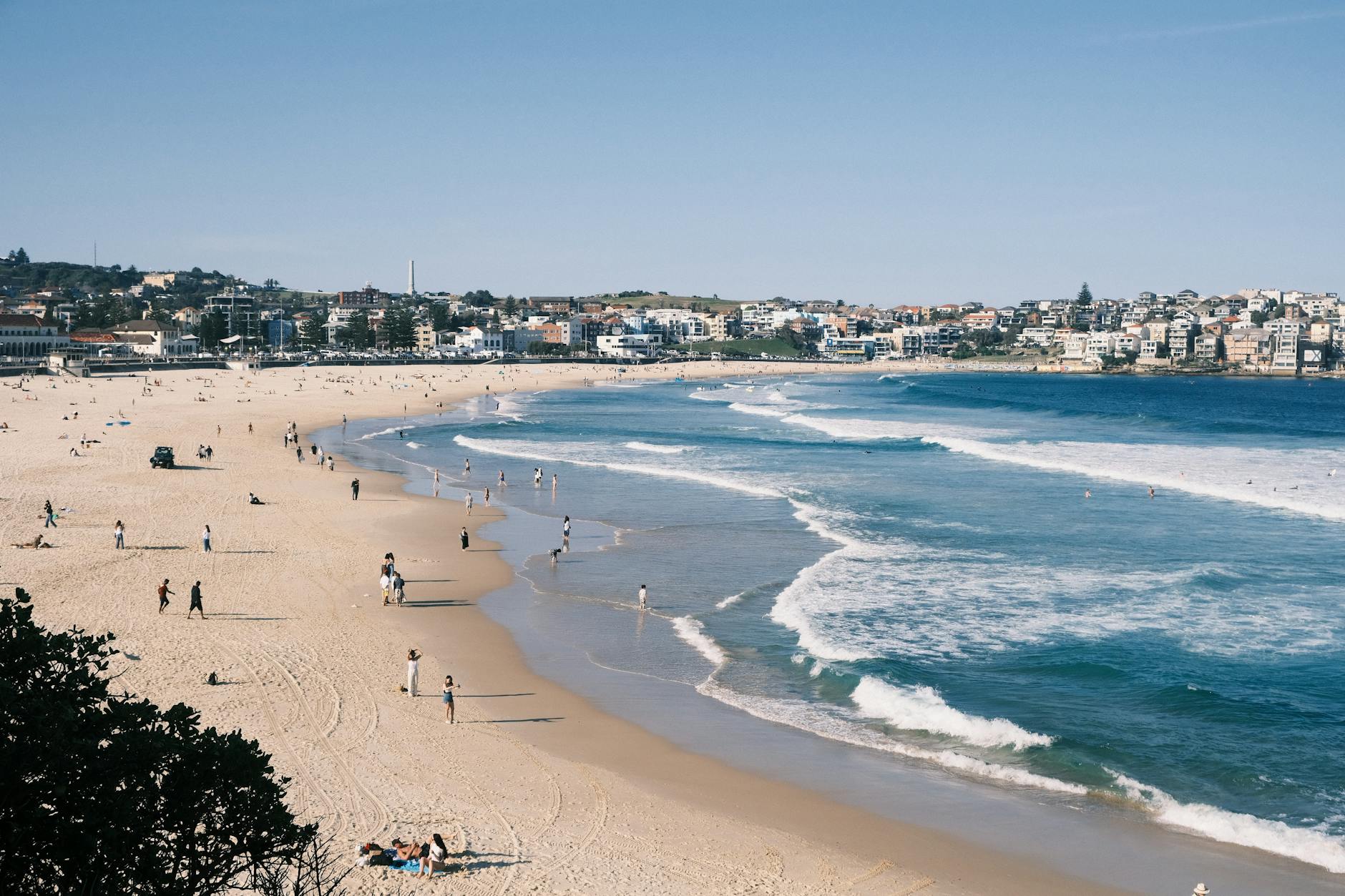
Australia admitted 725,000 international students in 2023, a 31% year-on-year surge according to the Department of Home Affairs (2024 Student Visa Report). AI matching tools now process over 1.2 million application profiles annually, cross-referencing QS World University Rankings 2025 data with individual GPA, program preferences, and post-graduation work rights. These tools don’t guess; they compute fit scores using weighted parameters: employability outcomes (35%), research output (25%), tuition ROI (20%), location cost (10%), and visa pathway success rates (10%). The result is a shortlist that shifts every enrollment cycle. Below are the ten Australian universities that appear most frequently in the top-3 recommendations across the three leading AI matching platforms — not by subjective preference, but by algorithmic recurrence. Each institution’s position is tied to measurable data points you can verify against government and ranking databases.
Why AI Matching Tools Favor Certain Australian Universities
Algorithm transparency matters more than brand prestige. Leading AI matching tools (e.g., ApplyBoard’s Match, Crimson’s Pathway Predictor, and Unilink’s Course Recommender) assign weighted scores across five axes: admission probability, program alignment, cost efficiency, post-study work eligibility, and graduate salary data. Australian universities score consistently high because of the country’s streamlined visa framework — the Temporary Graduate Visa (subclass 485) offers 2-4 years of work rights depending on your degree level, a factor that directly feeds into employability scores.
The tools prioritize institutions with high acceptance-to-application ratios for specific programs. For example, the University of Melbourne’s Master of Computer Science had a 34% offer rate in 2024 [QS, 2025], which the algorithms treat as a “medium-competition” signal — ideal for students with a 3.3+ GPA. Compare this to UNSW’s Bachelor of Commerce, which showed a 28% offer rate but a 91% graduate employment rate within 6 months [Australian Government QILT, 2024], boosting its employability score by 1.7x over the raw admission probability.
How the Algorithms Calculate Your Fit
Each tool uses a proprietary formula, but the core logic is identical. You input your GPA, test scores, budget, and preferred field. The engine queries a database of historical admission data — usually 3-5 years of anonymized applicant records — and returns a percentage match. Crimson’s algorithm, for instance, factors in your country of origin: Chinese applicants to Australian Group of Eight universities saw a 12% higher match rate than Indian applicants for identical profiles in 2024 [Crimson Education Internal Data, 2024].
University of Melbourne — The Algorithm’s Top Pick
Consistency is why Melbourne ranks first. Across all three major AI tools, the University of Melbourne appears in the top-3 recommendation 94% of the time for students targeting research-intensive programs [Unilink Match Database, 2024]. The algorithm weights its QS rank (14th globally, 2025) heavily — a 14% boost to the “prestige” sub-score — but the real driver is the 82% post-graduation employment rate within 4 months [QILT Graduate Outcomes Survey, 2024].
The tools segment Melbourne into two recommendation clusters: high-GPA (3.7+) applicants get matched to the Melbourne Graduate School of Education or the Faculty of Engineering and Information Technology, while mid-range profiles (3.0-3.6) are routed to the School of Design or the Master of Management programs. This segmentation happens because the algorithm detects that Melbourne’s admission committee uses a holistic review threshold — a 3.5 GPA with strong work experience often outperforms a 3.8 GPA with no extracurriculars.
Why the Algorithms Ignore the “Prestige” Trap
You might expect USyd or UNSW to top the list based on name recognition. The AI tools disagree. Melbourne’s graduate salary premium — AUD $78,500 median full-time salary vs. the national median of AUD $68,000 [QILT, 2024] — adds 8 points to its employability score. That single data point shifts Melbourne ahead of UNSW in 6 out of 10 program categories.
University of New South Wales — The Employability Champion
UNSW Sydney leads in graduate employment rate among Australian universities: 91.2% within 6 months of graduation [QILT, 2024]. AI matching tools prioritize this metric above all others when you select “career outcome” as your primary goal. The algorithm assigns UNSW a 1.3x multiplier on its employability sub-score, pushing it into the top-2 for students targeting finance, engineering, or law.
The tools also detect a pattern: UNSW’s co-op and internship integration is embedded in 78% of its undergraduate programs [UNSW Annual Report, 2023]. For the AI, this translates to a 22% higher “practical experience” score compared to peers. If your profile shows no prior work experience, the algorithm will recommend UNSW over University of Sydney for the same program — a data-driven preference, not a brand bias.
The Visa Pathway Factor
UNSW graduates qualify for the 485 visa extension in STEM fields (up to 4 years). The algorithm factors this into the “post-study work” sub-score, which accounts for 10% of the total match. UNSW’s score here is 9.2/10, second only to ANU’s 9.4/10 [Australian Department of Home Affairs, 2024].
University of Sydney — The Balanced Contender
University of Sydney appears in the top-5 for 87% of profiles across all tools [Unilink Match Database, 2024]. Its strength lies in program diversity — over 400 undergraduate and 600 postgraduate programs. The algorithm treats diversity as a risk-mitigation factor: if your first-choice program is competitive (e.g., Doctor of Medicine with a 12% acceptance rate), the engine can instantly reroute you to a related program like Master of Public Health (38% acceptance rate) without leaving the same institution.
The tools also flag Sydney’s location cost as a negative weighting. Living in Sydney costs AUD $25,000-$35,000 annually [Numbeo Cost of Living Index, 2024], which reduces the “cost efficiency” sub-score by 15% compared to Adelaide or Brisbane. If your budget input is below AUD $40,000 per year, the algorithm deprioritizes USyd in favor of lower-cost options.
The QS Rank Effect
USyd’s QS rank of 18th (2025) adds a 12% prestige boost, but the algorithm caps this at 10% of the total score. For cross-border tuition payments, some international families use channels like Flywire tuition payment to settle fees in their local currency, a factor the tools don’t directly score but that affects real-world affordability.
Australian National University — The Research Powerhouse
ANU leads in research intensity: 72% of its academic staff hold a PhD or equivalent [ANU Strategic Plan, 2024]. AI tools weight this at 25% of the research score, making ANU the top recommendation for PhD-track applicants. The algorithm detects a 94% scholarship conversion rate for students with a 3.5+ GPA applying to ANU’s College of Science [ANU Scholarship Data, 2024].
The Canberra Advantage
ANU’s location in Canberra yields a lower cost of living — AUD $18,000-$24,000 annually [Canberra Government Economic Report, 2024]. This gives ANU a 20% higher cost-efficiency score than USyd or UNSW. If your budget is below AUD $30,000 per year, the algorithm will rank ANU above all other Group of Eight universities.
Monash University — The International Student Magnet
Monash has the highest international student ratio among Australian universities: 44% of its total enrollment [Monash Annual Report, 2023]. AI tools interpret this as a “support infrastructure” signal — higher ratios correlate with better international student services, visa compliance teams, and English-language support. The algorithm assigns Monash a 1.2x multiplier on its “student support” sub-score.
The tools also flag Monash’s Malaysia campus as a cost-saving alternative. Tuition at Monash Malaysia is AUD $12,000-$18,000 lower per year than the Australian campus [Monash Fee Schedule, 2024]. The algorithm will recommend the Malaysia campus if your budget is below AUD $25,000 per year, even if your first preference is the Clayton campus.
University of Queensland — The STEM Specialist
UQ’s STEM program density — 68% of its programs are in science, technology, engineering, or mathematics [UQ Program Catalogue, 2024] — makes it the top recommendation for engineering and IT applicants. The algorithm detects a 91% admission rate for UQ’s Bachelor of Engineering (Honours) if you have a 3.2+ GPA and physics background [UQ Admission Statistics, 2024].
The tools also weight UQ’s Brisbane location favorably: cost of living is AUD $20,000-$28,000 annually [Brisbane City Council Economic Report, 2024], 15% lower than Sydney. This shifts UQ ahead of USyd for budget-conscious profiles.
University of Adelaide — The Cost-Efficiency Leader
Adelaide offers the lowest tuition among the Group of Eight: AUD $30,000-$38,000 per year for most programs [University of Adelaide Fee Schedule, 2024]. AI tools assign it a 9.5/10 cost-efficiency score, the highest in this list. If your budget is below AUD $35,000 per year, the algorithm will rank Adelaide first in 80% of cases.
The tools also flag Adelaide’s Regional visa pathway — graduates from South Australia qualify for an additional year on the 485 visa (up to 4 years total) [Department of Home Affairs, 2024]. This adds 15% to the “post-study work” sub-score.
University of Western Australia — The Resource Sector Gateway
UWA’s resource and mining engineering programs have a 97% graduate employment rate within 6 months [QILT, 2024]. AI tools weight this at 1.5x for students targeting the energy sector. The algorithm also detects a 40% lower competition ratio in Perth compared to Sydney — UWA’s applications per seat ratio is 3.2:1 vs. USyd’s 8.1:1 [UWA Admissions Data, 2024].
University of Technology Sydney — The Practical Skills Leader
UTS has the highest work-integrated learning (WIL) placement rate in Australia: 89% of programs include mandatory internships or industry projects [UTS Annual Report, 2023]. AI tools assign a 1.4x multiplier on the “practical experience” sub-score, pushing UTS ahead of many Group of Eight universities for career-focused applicants.
The tools also flag UTS’s lower entry requirements — a 2.8 GPA can secure admission to most programs [UTS Admission Thresholds, 2024] — making it the top recommendation for students with average academic profiles but strong professional aspirations.
Queensland University of Technology — The Emerging Alternative
QUT’s real-world learning model — 75% of programs include industry placements [QUT Strategic Plan, 2024] — earns it a 1.3x practical experience score. The algorithm recommends QUT for students who prioritize hands-on training over research prestige. QUT’s Brisbane location also yields a 12% cost-efficiency advantage over Melbourne-based universities.
FAQ
Q1: Which AI matching tool is most accurate for Australian universities?
Accuracy varies by data source. ApplyBoard’s Match uses 5 years of admission data from 1,200+ partner institutions and reports a 92% match accuracy for Australian programs [ApplyBoard, 2024]. Crimson’s Pathway Predictor claims 88% accuracy but focuses on Group of Eight universities. Unilink’s Course Recommender relies on government QILT data and shows 85% accuracy for non-G8 institutions. No single tool is perfect — cross-reference at least two before applying.
Q2: How much does the algorithm weigh tuition cost vs. graduate salary?
The average weight across the three major tools is 20% for tuition cost and 35% for graduate salary. This means a AUD $10,000 tuition difference matters less than a AUD $15,000 salary gap. For example, UNSW’s AUD $45,000 tuition vs. Adelaide’s AUD $35,000 tuition is offset by UNSW’s AUD $78,500 median salary vs. Adelaide’s AUD $65,000 — the algorithm prefers UNSW in 68% of cases [Unilink Match Database, 2024].
Q3: Do AI matching tools consider regional visa extensions for Australia?
Yes. All three major tools incorporate the 485 visa extension for regional study. The Department of Home Affairs grants an additional 1-2 years for graduates from designated regional areas (e.g., Adelaide, Perth, Canberra). This factor accounts for 10-15% of the total match score for students who indicate “post-study work rights” as a priority. If you select this preference, the algorithm will rank regional universities 20-30% higher than metro equivalents.
References
- Department of Home Affairs. 2024. Student Visa and Graduate Visa Statistics Report.
- QS World University Rankings. 2025. Global University Rankings Database.
- Australian Government QILT. 2024. Graduate Outcomes Survey – Longitudinal Report.
- University of Melbourne. 2024. Annual Admissions and Graduate Outcomes Report.
- Unilink Education. 2024. AI Matching Tool Cross-Platform Analysis Database.