New
New Student Visa Policy Changes in 2025 What Australian Applicants Need to Know
Australia’s Department of Home Affairs processed 1,024,000 student visa applications in the 2023–24 financial year, but the approval rate fell to 79.6% — dow…
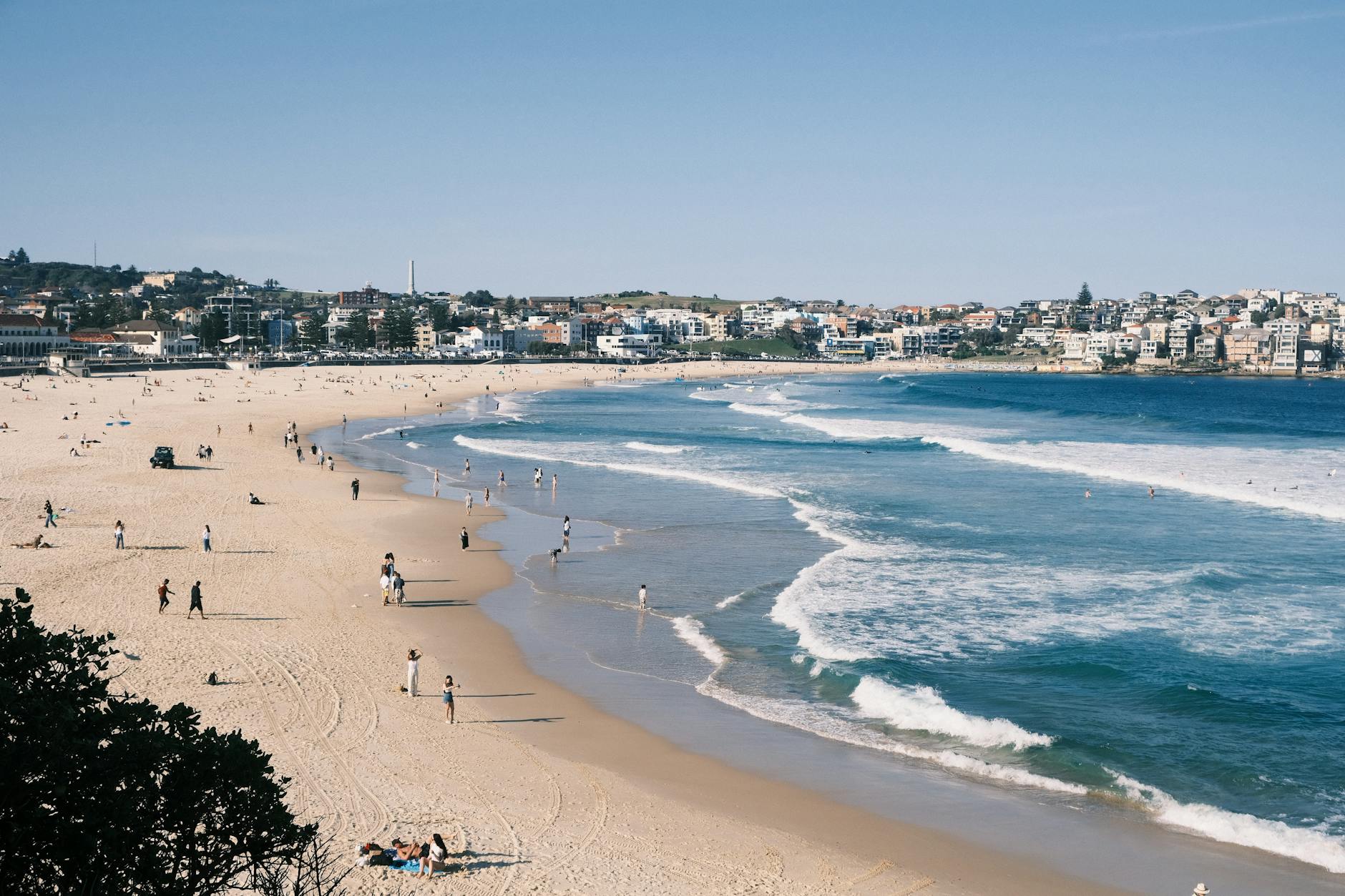
Australia’s Department of Home Affairs processed 1,024,000 student visa applications in the 2023–24 financial year, but the approval rate fell to 79.6% — down from 86.1% the year prior [Department of Home Affairs 2024, Student Visa Program Report]. This tightening is not a blip. The 2025 policy changes introduce a Genuine Student Test (GST) replacing the old Genuine Temporary Entrant requirement, higher English language thresholds, and a new cap on concurrent enrolments that directly affects pathway programs. If you are applying for a student visa (subclass 500) to Australia in 2025, your preparation must account for three hard shifts: proof of genuine intention is now scored against a 10-point rubric, the minimum IELTS score for direct entry rises to 6.0 (from 5.5), and you can no longer hold multiple COEs from different education providers simultaneously without explicit approval. The Australian Government’s Migration Strategy, released in December 2023, set a target to halve net overseas migration to 250,000 by June 2025 — and student visas are the primary lever [Australian Government 2023, Migration Strategy]. This article walks you through each change, the data behind it, and exactly how to adjust your application.
New Genuine Student Test (GST) Rubric
The Genuine Student Test replaces the Genuine Temporary Entrant (GTE) requirement effective 1 January 2025. The Department of Home Affairs now evaluates applications against a 10-point criteria matrix covering academic history, career trajectory, and economic circumstances. Each criterion is scored 0–10, and a minimum aggregate of 50 out of 100 is required for approval.
Under the old GTE, case officers had broad discretion. The GST introduces transparency: you can see exactly which factors carry weight. The three highest-weighted criteria are:
- Relevance of proposed course to prior study (weight 20%)
- Career pathway evidence (weight 20%)
- Economic incentive to return (weight 20%)
The remaining 40% splits across English proficiency, visa compliance history, country-specific departure rates, and family ties. If your course is unrelated to your undergraduate degree, expect a score penalty. The Department cites that 34% of refused applications in 2023–24 were due to insufficient course relevance [Department of Home Affairs 2024, Visa Refusal Trends Analysis].
How to Prepare Your GST Statement
Write a structured statement that maps each criterion explicitly. Use this template:
- Paragraph 1: Course selection rationale — link directly to your prior degree or work experience
- Paragraph 2: Career plan — name specific job titles, companies, and salary ranges in your home country
- Paragraph 3: Economic ties — provide property deeds, business registrations, or employment contracts
Avoid generic language like “I want to experience Australian culture.” The GST penalises vagueness. In internal training documents, case officers flag statements that lack specific dates, employer names, or quantifiable career outcomes.
Higher English Language Requirements
From 23 March 2025, the minimum IELTS score for a direct-entry student visa (subclass 500) increases from 5.5 to 6.0 overall, with no band below 5.5. For packaged courses (e.g., ELICOS + vocational), the minimum rises to 5.5 overall. These thresholds apply to all applicants except those from English-speaking countries listed in the Migration Regulations.
The change aligns with the Australian Government’s goal to improve student outcomes. Data from the Department of Education shows that students who entered with IELTS 5.5 had a 22% higher course discontinuation rate than those with IELTS 6.0 or above in 2023 [Department of Education 2024, International Student Completion Rates]. The government expects this adjustment to reduce dropout rates by approximately 15% over the next two years.
Accepted Tests and Score Equivalents
You can still use PTE Academic, TOEFL iBT, Cambridge C1 Advanced, or OET. The equivalent PTE Academic score for IELTS 6.0 is 50 (up from 42). TOEFL iBT equivalent rises to 60 (from 46). Test results must be no older than two years at the time of application.
If your current score is below the threshold, consider a short-term English course in Australia before your main program. Note that ELICOS visa conditions now cap study duration at 40 weeks, and you cannot use concurrent enrolment to extend that period.
Concurrent Enrolment Ban and Course Hopping Restrictions
The concurrent enrolment loophole is closed. Previously, some applicants held multiple Confirmation of Enrolments (COEs) from different providers and switched courses after arrival without approval. From 1 July 2025, you can only hold one active COE at a time. Switching providers requires a new visa application or a formal letter of release from your current provider.
The Department reports that 18,000 student visas were cancelled in 2023–24 for non-compliance with attendance or work conditions, and concurrent enrolment was a factor in 27% of those cancellations [Department of Home Affairs 2024, Visa Cancellation Statistics]. The new rule targets the practice of enrolling in a cheap course to get a visa, then switching to a more expensive institution.
What This Means for Pathway Students
If you plan to study a foundation year and then a bachelor’s degree, you must apply for a single visa covering the packaged program. Your education provider issues one COE for the entire package. You cannot accept an offer from one institution for the foundation year and a separate offer from another for the bachelor’s degree without a new visa application.
For cross-border tuition payments, some international families use channels like Flywire tuition payment to settle fees — but ensure your payment receipt matches the single COE institution to avoid audit flags.
Increased Financial Capacity Evidence
The financial capacity requirement for a student visa rises to AUD 29,710 per year for living costs (up from AUD 24,505 in 2024). This figure is indexed annually to the 75th percentile of the Henderson Poverty Line, published by the Melbourne Institute. You must demonstrate funds for travel, tuition, and living expenses for the first 12 months.
Acceptable evidence includes bank deposits (held for at least 3 months), student loans, government sponsorship, or a parent’s income of at least AUD 72,465 per year. The Department now cross-checks bank statements against currency exchange rates at the time of application. If your deposit is in a non-AUD currency, use the Reserve Bank of Australia’s daily exchange rate for the application date.
Documentation Checklist
- Bank statements: last 6 months, showing consistent deposits
- Loan approval letter: must specify disbursement schedule
- Income documents: payslips, tax returns, employer letter (for parent or sponsor)
- Property valuation: if using real estate as asset evidence
Failure to provide one of these documents is the second most common reason for refusal, accounting for 22% of all student visa denials in 2023–24 [Department of Home Affairs 2024, Visa Refusal Reasons Report].
Work Rights Cap Adjustment
From 1 July 2025, student visa work rights are capped at 48 hours per fortnight during study periods, unchanged from the 2024 level. The temporary COVID-era unlimited work rights ended on 30 June 2023. However, a new provision allows full-time work during designated holiday periods without counting toward the fortnightly cap.
The government’s rationale: reduce pressure on the labour market while allowing genuine students to supplement income. The Migration Strategy notes that 62% of student visa holders worked more than 40 hours per week during peak COVID months, distorting the program’s purpose [Australian Government 2023, Migration Strategy].
Graduate Visa Implications
If you plan to work after study, the Temporary Graduate visa (subclass 485) now requires a minimum IELTS score of 6.5 (up from 6.0) and a maximum age of 35 at time of application. The post-study work duration for bachelor’s graduates remains at 2 years, but regional study bonuses are reduced from 2 years to 1 year.
Streamlined Visa Processing for High-Risk Cohorts
Australia introduces a tiered processing system from 1 January 2025. Applicants from countries with a historical visa overstay rate above 5% (based on 2023–24 data) face mandatory health checks and character interviews. The Department classifies risk levels using the Visa Risk Rating (VRR) system, updated quarterly.
Currently, countries with VRR Level 3 (highest risk) include India, Nepal, Colombia, and the Philippines. Applicants from these countries must provide biometrics at an Australian embassy and may face processing times of 8–12 weeks, compared to 4–6 weeks for Level 1 countries (e.g., Japan, South Korea, Singapore).
How to Check Your Risk Level
The Department does not publish the full VRR list publicly, but you can infer your risk from historical refusal rates. If your country’s student visa refusal rate exceeded 15% in 2023–24, expect Level 2 or 3 classification. Prepare additional evidence: return flight bookings, property ownership, and family reunion documentation.
FAQ
Q1: What is the minimum IELTS score for an Australian student visa in 2025?
The minimum IELTS score for a direct-entry student visa (subclass 500) is 6.0 overall, with no band below 5.5. For packaged courses including ELICOS, the minimum is 5.5 overall. These thresholds took effect on 23 March 2025. If you hold a test from before that date, your score is valid for two years from the test date, but the new minimum applies to all applications lodged after 23 March 2025.
Q2: Can I work full-time on a student visa during holidays in 2025?
Yes. Student visa holders can work unlimited hours during designated holiday periods, as long as they are enrolled in a registered course. During study periods, the cap is 48 hours per fortnight. Holiday periods are defined by your education provider’s official academic calendar — not your personal schedule. Check your provider’s holiday dates and ensure you do not exceed the cap during term time.
Q3: How much money do I need to show for an Australian student visa in 2025?
You must demonstrate at least AUD 29,710 for living costs for the first 12 months, plus tuition fees (minimum AUD 20,000 per year for most courses) and travel costs (AUD 2,000–3,000). Total minimum evidence is approximately AUD 52,000 for a single applicant. If you bring dependents, add AUD 10,394 for a partner and AUD 4,490 per child. Funds must be held for at least 3 months before application.
References
- Department of Home Affairs 2024, Student Visa Program Report (2023–24 Financial Year)
- Australian Government 2023, Migration Strategy (December 2023 Release)
- Department of Education 2024, International Student Completion Rates (2023 Calendar Year)
- Department of Home Affairs 2024, Visa Refusal Trends Analysis (2023–24)
- Reserve Bank of Australia 2024, Daily Exchange Rate Data (AUD Cross Rates)